

How Invisalign Work to Straighten Your Teeth
Dantam Clinics
October 9, 2026
Choosing an orthodontic treatment involves understanding how teeth are expected to move, how the appliance should be used and why regular dental supervision matters. Invisalign uses a planned series of removable trays to guide selected teeth through gradual stages of movement based on an individualized treatment plan.
What Are Invisible Aligners?
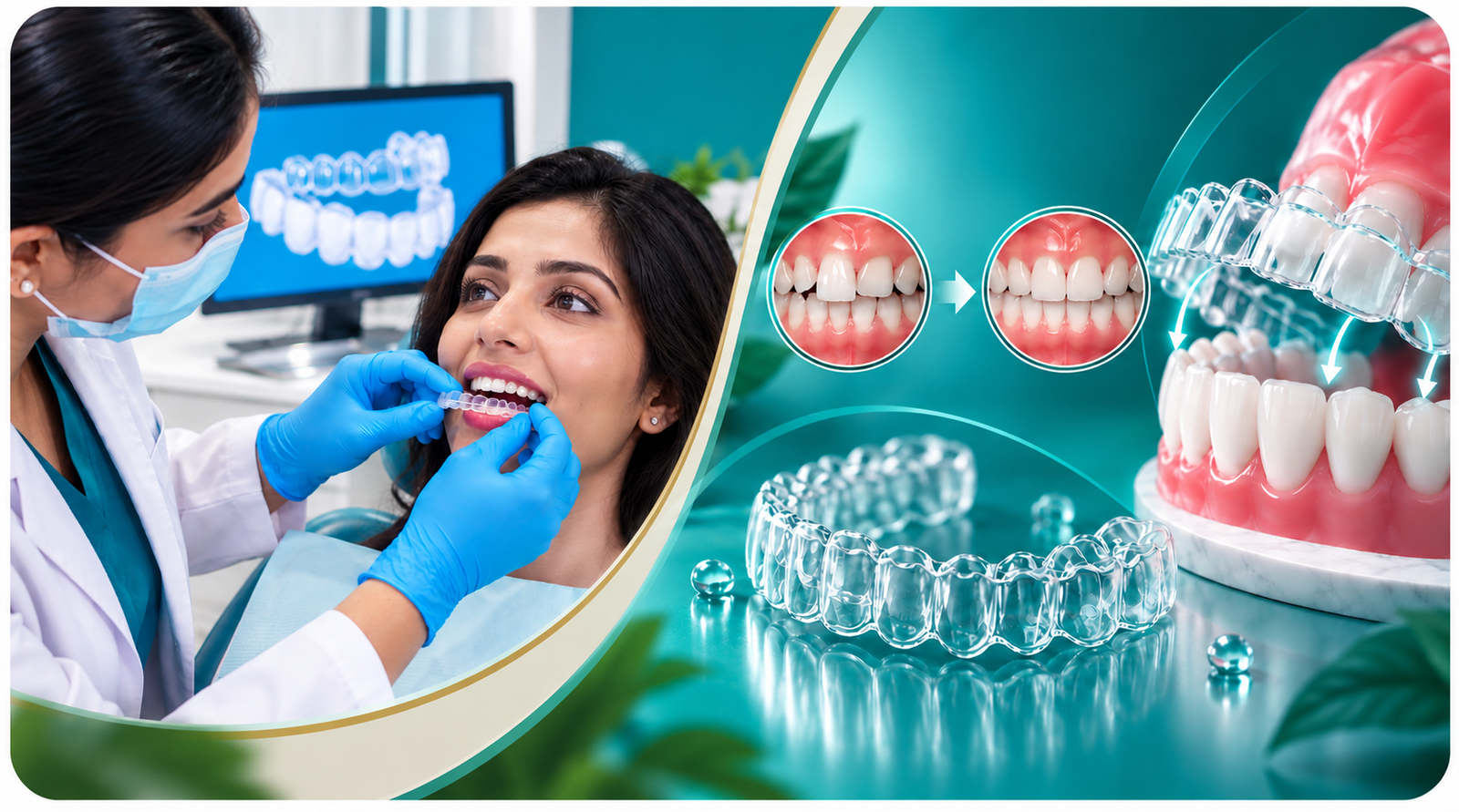
Invisible aligners are custom made trays created to fit over a patient’s teeth. Rather than relying on brackets and wires, these trays are designed to apply controlled pressure to particular areas. Each tray represents a specific stage within the overall orthodontic plan.
The trays are normally worn for most of the day and removed when eating, brushing, flossing or following other instructions from the dental professional. Consistency is important because every stage is connected to the next part of the treatment sequence.
How Do Clear Aligners for Teeth Work?
Treatment usually begins with an examination of the teeth and bite. The dental professional studies the patient’s orthodontic requirements and determines which movements can be addressed with removable trays.
The process can involve:
- Each tray has a slightly different shape from the previous one.
- The difference allows pressure to be directed toward selected teeth.
- As the patient progresses through the prescribed series, the teeth are gradually guided toward their planned positions.
- Different teeth may be addressed at different stages, depending on the treatment design.
Another important point about clear aligners for teeth is that the trays are not intended to produce every movement simultaneously. Each stage follows the treatment design created for the individual patient.
How Does Alignment for Teeth Develop?
What Happens Before Treatment Begins?
Understanding Teeth Invisible Aligners
Teeth invisible aligners are designed to sit closely over the teeth while remaining relatively discreet during everyday activities. Their removable design also allows patients to take the trays out when maintaining their normal brushing and flossing routine.
However, removable does not mean optional. Teeth Invisible Aligners need to be used according to the instructions provided by the dental professional. Frequently leaving them out or changing the sequence without guidance can interfere with the intended progression.
Patients should also keep the trays protected when they are not in use. Storing them properly can reduce the possibility of damage or accidental loss.
Who May Be Suitable for Aligner Treatment?
People with certain spacing, crowding, or tooth position concerns may be considered for orthodontic treatment using removable trays. clear trays can be an option in selected cases, but suitability must be determined through an individual dental examination.
The appearance of the teeth alone does not provide enough information. The condition of the gums, existing dental work, bite relationship, and required tooth movements can all affect treatment planning.
For this reason, information about clear trays should be used as general guidance rather than as a substitute for an examination by a qualified dental professional.
What Are the Practical Advantages?
What Can Affect Treatment Progress?
How Should the Trays Be Maintained?
This is another suitable section because maintenance involves several separate actions. Patients should follow proper care practices to keep their trays clean and in good condition
These include:
- Keeping the trays in a protective case when they are not being worn
- Cleaning them according to the dental professional’s instructions
- Brushing and flossing before replacing the trays after meals
- Avoiding excessive heat that could affect the material
Proper handling helps maintain the shape and fit of each stage.
Why Choose Dantam Dental in chintal for Invisalign?
What Happens After the Planned Stages?
Completing the tray sequence does not necessarily mean that orthodontic care ends immediately. Teeth can naturally shift after active movement, which is why a dental professional may recommend a retention plan.
The long term objective is to maintain the alignment for teeth achieved during treatment. Following the recommended retention instructions can help support the new tooth positions.
Frequently Asked Questions
How do invisible aligners straighten teeth?
Invisible aligners use a series of customized trays that apply controlled forces to gradually move teeth according to an individualized treatment plan. Invisalign offers a discreet approach to achieving a more aligned and confident smile.
Are invisible aligners suitable for everyone?
No. Invisible aligners are not suitable for every orthodontic condition. A dental examination is necessary to determine whether they can address your specific alignment concerns.
How long does clear aligner treatment take?
Treatment time varies depending on the complexity of the case, the planned tooth movements and patient compliance. Your dental professional can provide a more personalized estimate after an examination.
Can clear aligners improve the alignment of teeth?
Yes, clear aligners for teeth can be used for certain alignment concerns, including some cases of crowding, spacing and tooth rotation. Suitability depends on the individual’s condition.
Do I need retainers after treatment?
Retainers are commonly recommended after orthodontic treatment to help maintain the new tooth positions. Your dental professional will provide instructions based on your treatment.
Choosing the Right Dental Clinic for Regular Appointments
SUBSCRIBE
SUBSCRIBE TO OUR NEWSLETTER

How Invisalign Work to Straighten Your Teeth